From baking cookies to playing board games, everyday play helps children build confidence, creativity and problem-solving skills. Here’s how grandparents can help grandchildren learn through play—and what to look for when choosing an early learning environment.

When my kids were little, their grandma used to pull out a plastic container full of empty thread spools and add them to a pile of drink coasters she had already placed on her carpet.
“There you go, kids,” she would say. “Play with those for a while.”
And do you know what? They did.
Of course, when you fast forward to grandkids in 2026, the toys may look very different. Alongside blocks, puzzles and craft supplies, there are also tablets, phones and other digital tools. But no matter what’s in front of them, children still need opportunities to imagine, experiment, create and connect through play. And grandparents can help make sure those moments happen.
Technology has its place—but so does unplugged play
While it’s important to recognize that technology has an important role to play in children’s lives today, and we know they are growing up in an increasingly digital age, too much screen time can negatively impact their ability to become lifelong learners.
So, what can we—as grandparents—do to ensure that our grandkids are still living IRL and experiencing opportunities that allow them to use their unprompted imaginations, develop problem-solving skills and improve their basic human interactions?
Baking cookies with Grandma or Grandad is a simple example of how we can contribute to a child’s creativity and hands-on learning. Cutting up actual fruit versus slicing through it in a video game improves their tactile skills (while also contributing to the family!). Board games require manual manipulation, and often math skills, which will contribute to their problem-solving capabilities more than driving a car on a screen.
Common thinking might be that the real learning starts when a child enters kindergarten at age four or five. But experts know that some of the most important brain development happens much earlier. During the first five years of life—a period known as “synaptic blooming”—a child’s brain forms millions of new neural connections every second, creating the foundation for future learning, behaviour and development.
But this remarkable period doesn’t simply happen on its own. Like a garden, those connections need to be nurtured—through stories shared, conversations had, questions answered and time spent together.
What to look for in an early learning program
One of the most meaningful ways families can support this early development is through early learning experiences that help children build confidence, curiosity and foundational skills. And, as grandparents, we are often seen as a trusted source of advice to help parents navigate these decisions.
When considering a specific school, questions we should be asking might include:
- Does the program prioritize hands-on, play-based learning?
- How are screens or technology used, if at all?
- Are the children encouraged to move, create, build, sing, tell stories and collaborate?
- Are educators trained in early childhood development?
- Does the curriculum support academic, social, emotional, physical and creative growth?
- Does the environment feel warm, joyful, structured and intentional?
- Is this a place where you feel your grandchild will be known, encouraged, challenged, comforted and inspired?
Most importantly, you’ll want to confirm that this is a place where play is treated as meaningful—not just recreational.
One approach to play-based early education
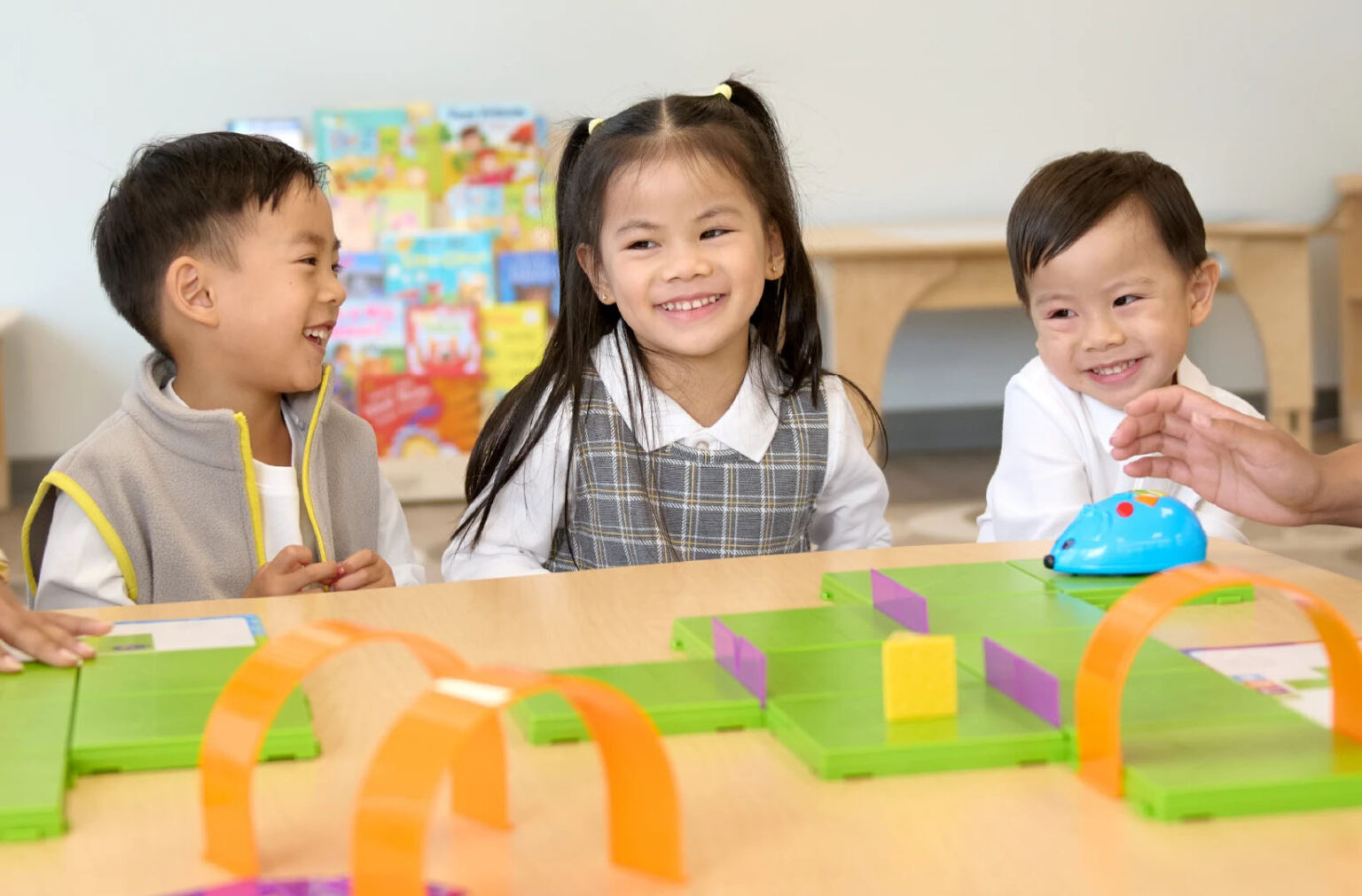
In learning more about today’s early learning options, one school that stood out to me was CEFA (Core Education & Fine Arts) Early Years School. I was particularly drawn to its approach of blending academics with creativity, introducing children to literacy, numeracy, STEM concepts, music, visual arts, movement, storytelling and problem solving in age-appropriate ways.
What resonated with me is that the goal isn’t simply to prepare children for kindergarten, but to nurture the confidence, curiosity and love of learning that can last a lifetime. It’s the same principle we’ve been talking about all along: When children are given opportunities to explore, create, question and play, they’re building skills that extend far beyond the classroom. If you’re helping your family explore early learning options, CEFA is worth considering. You can learn more at CEFA.ca.
Helping kids learn through play doesn’t have to be complicated
As someone who can’t even sew on a button, I’d have a hard time replicating the thread spools for my grandkids to play with. But I’m also having a hard time letting them win at the many board games we constantly play, as they legitimately win these games most of the time.
Finding a way to engage in meaningful play with our grandkids takes many forms. Play around to find what works with your family.