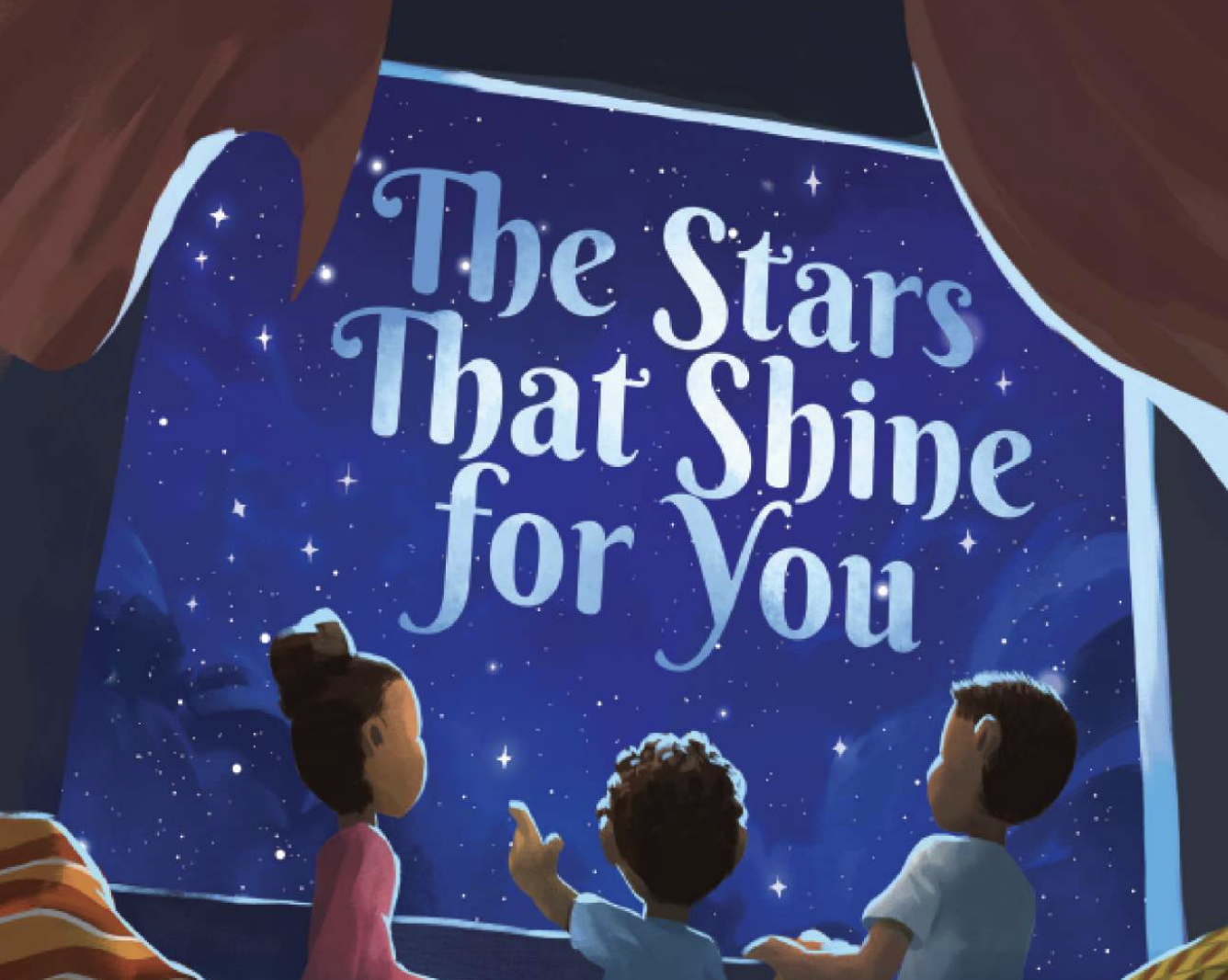
Loss is a difficult subject to tackle, which means many parents are uncomfortable when they need to talk to kids about grief. We chatted with author Rishma Govani about her new book, The Stars That Shine for You—a story that can help to start the conversation.
I’m the friend people call when something bad happens. I know that might sound a little dark, and you might wonder why I ever answer the phone, but it’s actually a role I’ve come to see as very important. I’m the holder of loss, for lack of a better term. Someone has to be, right?
I mentioned this to a friend of mine about a year ago. I observed that I sometimes don’t hear from someone for ages but when they’ve experienced some sort of trauma, my phone rings. She said, “You must know why.” But I didn’t. I mean, I’ve had my fair share of heartbreaking events, but so has everyone. What makes me any different?
“You just acknowledge how much something hurts. You never try to change the subject,” she said. “You never try to cheer the person up. You can just sit in the sadness with them. That’s not easy to do.” I made a joke about just not knowing what to say, but she rolled her eyes and told me to shut up and accept the compliment.
I’ve thought about that conversation so many times in the months since. I think it comes down to the fact that grief doesn’t scare me, or make me uncomfortable. I think there has to be room for grief, in all things. And I don’t just mean death, either. Grief can come with any loss—even happy things can have a degree of grief (just ask any parent at a high school graduation!). But in North American culture, we tend to think of death and loss in a negative light, which means we find it hard to talk to our kids about grief. But if we remove the taboo and make it more acceptable to share our grief, it means that we can also learn to openly support one another through it.
That’s why I was especially intrigued by a pitch I received about a book called The Stars That Shine For You, by Canadian author Rishma Govani. This beautifully illustrated children’s book takes a unique, poetic approach to grief, by shining a light on diverse practices and traditions around the world. I loved that this book, inspired by Govani’s late husband Aly Mulji, aims to make it easier for kids to grasp losing someone close to them (and easier for parents to talk to kids about grief). I was delighted to chat with Govani, to hear more about The Stars That Shine for You and why it’s such an important message for her personally.
ParentsCanada: Tell us about how the book came to light.
Rishma Govani: My husband was diagnosed with a rare, incurable sarcoma in 2014, and I say that we got “six bonus years.” (Mulji died in September 2020.) We grieved together. There were many points in that six-year journey where we thought this was it, but then a new treatment option would be put on the table. Ultimately, we were given bad news often. And while our kids knew that their dad was sick, they were very young, plus he was often quite vibrant and didn’t really talk about his illness. That said, I knew we would eventually have to have some hard conversations and prepare them for what was coming. This book essentially allows parents to open the door to conversations about grief and death.

PC: What has the reception been like so far?
RG: My first book (called Sushi & Samosas, which celebrates food traditions around the world) was easy to promote, easy to talk about. In comparison, this book is a downer. It’s a more serious subject. I’ve even had a couple of family friends and neighbours say, “I’m not sure we’re ready for this conversation.” So it’s interesting. But I’ve started to tell parents and teachers that they can read the book just as part of story time, as part of the regular rotation of books. This introduces the concept of grief before it becomes necessary. I’m really looking forward to going into schools to read the book and talk about it with the kids, too.
PC: People often think grief and loss has to relate to a death or another huge event, but it really doesn’t. We grieve small losses every single day, and that’s okay. Do you think it’s important to teach kids this message?
RG: It’s not just as dark and somber as death. It’s loss. It could be the loss of a friendship, or a friend moving away. It could be a pet dying. It could be moving on from grade two to grade three! Our grief literacy can improve if we stop putting sad things in a box and labeling it difficult. It’s reality. Reality has ups and downs, hard things and sad things, funny things and serious things. It’s just exposure to real life. I think this book falls into that category.
PC: Has writing this book helped you in your own grief?
RG: It has been an interesting journey. In dealing with my own personal devastation and grief, being able to open up the conversation and do something wider has been a great way for me to leave a legacy for Aly. It’s in honour of him, and sharing the message is an act of love, an act of service, beyond his death. The way I visualize it now, there’s a hole. That hole is never going to be filled. But seeds are being planted around the hole, so there’s still a garden growing in spite of the hole. You still have to tend that garden and make it beautiful, but the hole never goes away. There’s still a glorious life to live.
To get your copy of The Stars That Shine for You ($21), visit chapters.indigo.ca. Are you an educator who is interested in having Rishma Govani come and speak to your classes? Reach out to her at [email protected] to chat.