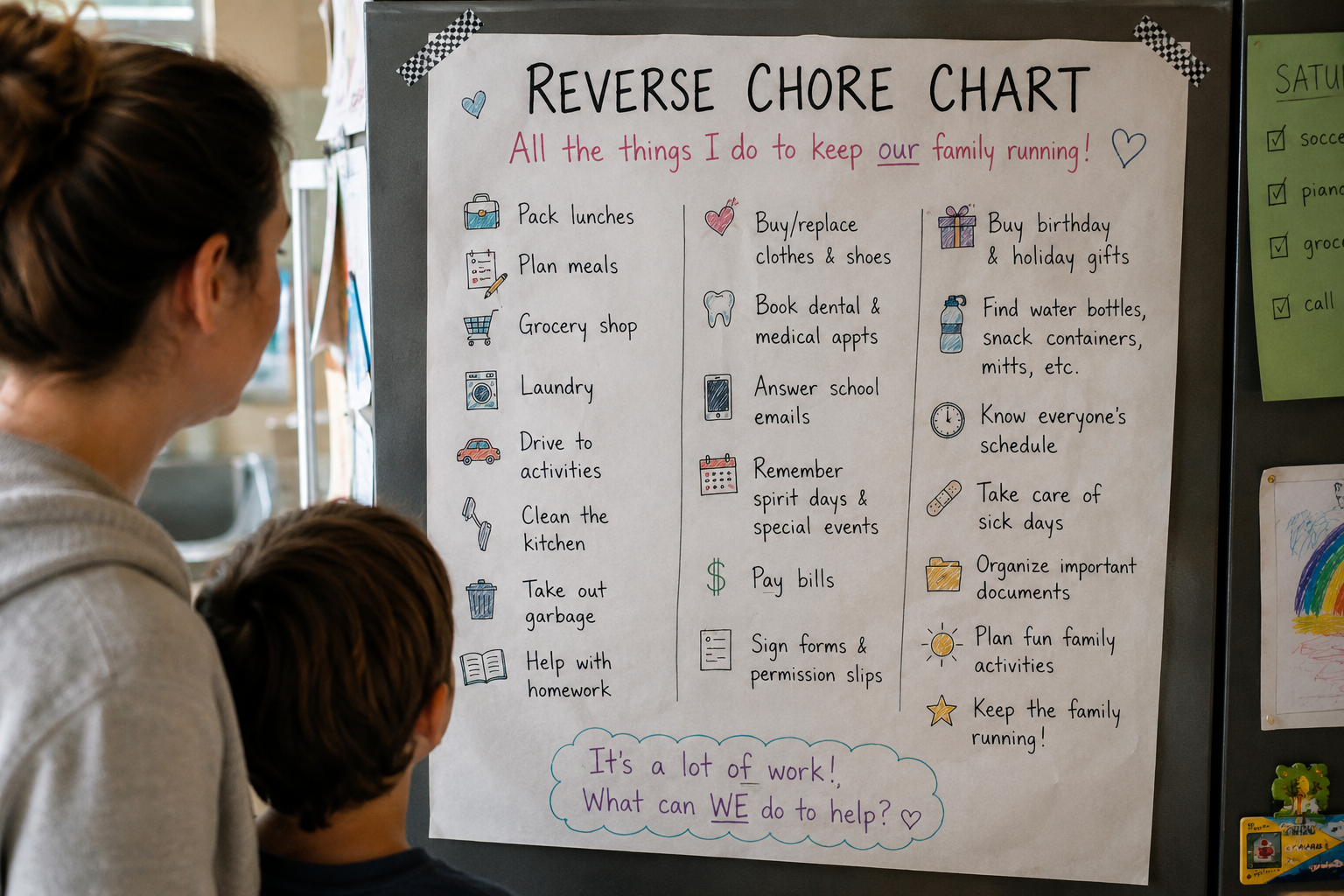
The “reverse chore chart” parenting trend is less about assigning chores and more about helping kids understand the invisible work that keeps a household running.
Most parents have had this moment: You spend 45 minutes making lunches, finding missing library books, signing field trip forms and locating someone’s left cleat…only to hear, “What’s for dinner?”
That’s part of the reason “reverse chore charts” have struck such a nerve online.
Unlike traditional chore charts, which assign tasks to kids, reverse chore charts list all the things parents already do to keep family life functioning. And we’re not talking just the obvious chores like laundry or dishes, but the invisible work too: things like remembering birthdays, booking dentist appointments, replacing outgrown running shoes, keeping track of school emails and knowing which child suddenly hates yogurt this week.
The goal is not to guilt kids or turn parenting into a performance review. Supporters say the idea is to help children better understand the mental load involved in running a household—and eventually encourage them to participate more thoughtfully in family life.
Done well, it can also lead to some surprisingly meaningful conversations.
Why Reverse Chore Charts Resonate With Parents
Many parents, especially moms, carry a huge amount of invisible labour every day. They are not just doing tasks—they are tracking, anticipating, remembering, planning and managing.
And because so much of that work happens in the background, kids often have no idea it’s happening at all.
A reverse chore chart makes that labour visible.
It can also help shift chores away from punishment and toward teamwork. Instead of kids feeling like they are being assigned random jobs by a household dictator, they begin to see themselves as contributors to a shared ecosystem (which sounds very productive and wholesome until someone still leaves their wet towel on the floor six minutes later).
How To Set Up a Reverse Chore Chart
The key is to keep it practical, collaborative and age-appropriate.
Step 1: Write Down Everything It Takes To Run Your Household
This is the root of the whole exercise so really take stock, and write down everything. And yes, we mean everything.
Include things like:
- packing lunches
- grocery shopping
- washing sports uniforms
- helping with homework
- arranging childcare
- paying bills
- replacing toiletries
- scheduling appointments
- planning meals
- answering school emails
- buying birthday gifts
- keeping track of permission slips
The point is to show the full picture, not just the stuff that’s super-obvious.
Step 2: Let Kids React
This part can actually be surprisingly eye-opening.
Some kids genuinely have no idea how much coordination happens behind the scenes. Others may suddenly realize why you sound stressed when three people ask for different snacks at the exact same moment.
Keep the conversation calm and curious. This is not about making kids feel guilty or overwhelmed.
Try questions like:
- “What surprised you?”
- “What jobs do you think take the most time?”
- “What do you think would happen if nobody did these things?”
Step 3: Find Small Ways Kids Can Contribute
This is where awareness can turn into action.
Rather than assigning huge responsibilities right away, look for small ways kids can reduce the family mental load.
That might mean:
- putting permission slips directly into backpacks
- refilling their own water bottles
- helping prep lunches
- laying out clothes the night before
- keeping track of library books
- helping younger siblings get ready
Even younger kids can participate in age-appropriate ways. The goal is not perfection—it’s participation.
Step 4: Focus on Appreciation, Not Scorekeeping
This is the part many families miss.
A reverse chore chart works best when it sparks appreciation and teamwork, not resentment. If it becomes a running tally of parental sacrifice, everyone’s going to have a bad time (and you probably aren’t going to get anywhere with sharing your to-do list).
The most successful version of this trend tends to be the least dramatic one: a household where everyone better understands what goes into caring for one another.
And honestly, that awareness matters.
Because one day, your kids will grow up, move out and suddenly realize that groceries do not magically appear in the fridge and clean towels do not regenerate on their own.
The reverse chore chart just gives them a little preview.