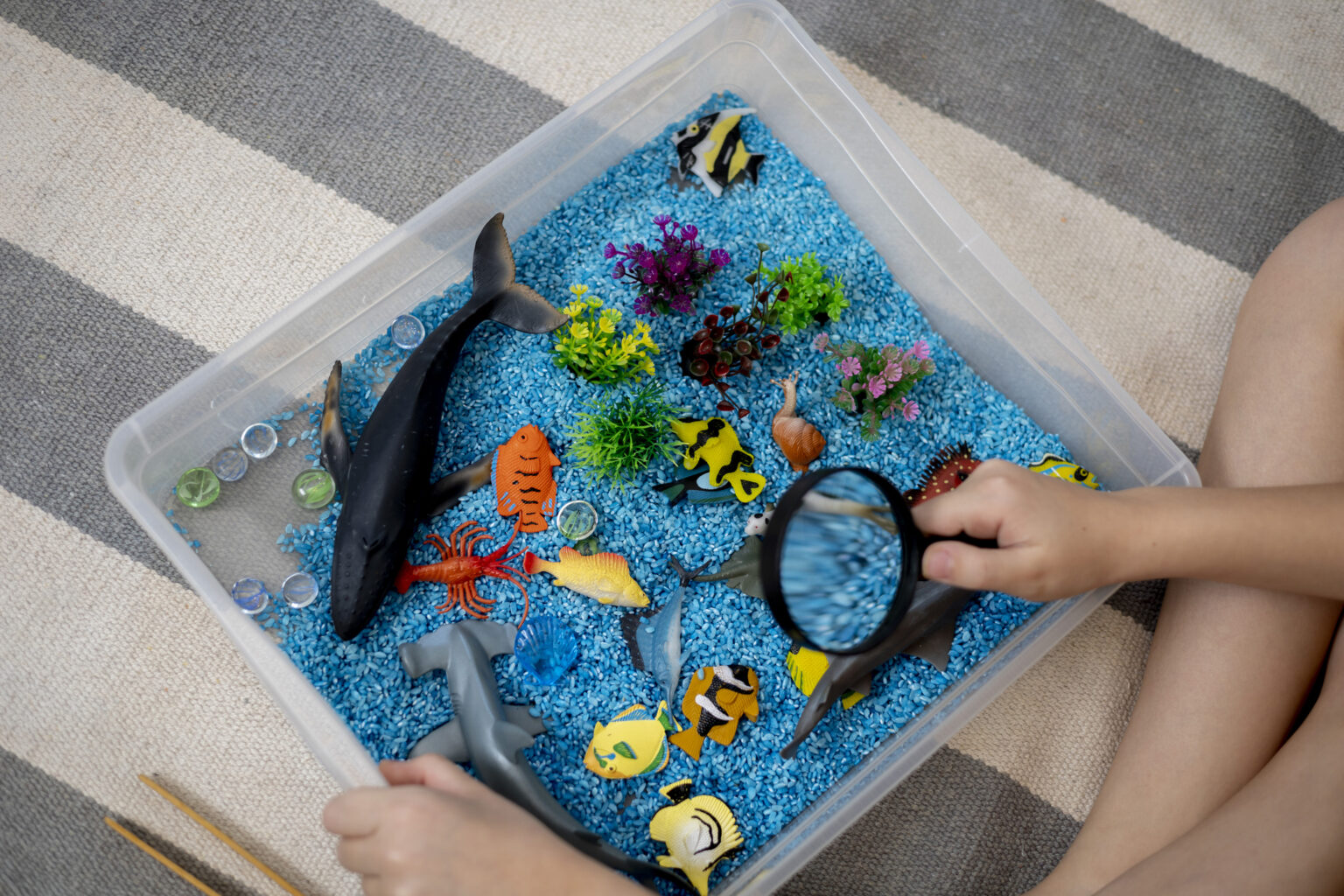
Sensory bins keeps little hands busy while supporting creativity, focus and fine motor skills—plus it might buy you enough time to drink a semi-hot coffee.
Parents of toddlers are constantly searching for activities that hit the magical parenting trifecta: easy to set up, actually engaging and capable of holding a child’s attention for more than 90 seconds. Enter the sensory bin.
These hands-on play stations have exploded online in recent years, with parents filling containers with everything from dyed rice and pom-poms to scoops, toy animals and frozen dinosaurs trapped in ice. And while sensory bins definitely have a reputation as a “buy yourself 15 minutes of peace” activity, experts say they can also help support creativity, independent play, early problem-solving and fine motor skill development.
The best part? You do not need fancy supplies or Pinterest-level crafting skills to make one.
How to Build Basic Sensory Bins
Materials for Basic Sensory Bins
- A large plastic bin, baking tray or shallow storage container
- A filler material (rice, dried pasta, oats, kinetic sand, water, pom-poms, etc.)
- Scoops, cups, spoons or tongs
- Small toys or objects to hide and discover
- A towel, tablecloth or sheet for easier cleanup
Instructions for Basic Sensory Bins
- Choose your base material and pour it into the bin.
- Add tools for scooping, pouring, digging or sorting.
- Toss in a few themed objects or toys.
- Place the bin somewhere easy to clean (outside is a parenting power move if weather allows!).
- Let kids explore freely. There’s no “right” way to play.
Sensory Bin Ideas to Try
Rainbow Rice Bin
Materials
- Uncooked rice
- Food colouring
- Zip-top bags or containers
- Small rainbow toys, pom-poms or scoops
Instructions
- Divide rice into bags.
- Add a few drops of food colouring to each bag and shake until coated.
- Spread rice onto a tray to dry.
- Combine colours in a bin and add scoops and toys.
Dinosaur Excavation Bin
Materials
- Toy dinosaurs
- Dried chickpeas, kinetic sand or oats
- Small shovels or spoons
- Optional: frozen ice cubes with mini dinosaurs trapped inside
Instructions
- Fill the bin with your chosen base.
- Hide dinosaurs throughout.
- Give kids tools to dig, scoop and rescue the dinos.
- For bonus chaos…ahem, fun, add frozen dinosaurs and warm water for “excavation.”
Pom-Pom Rescue Bin
Materials
- Pom-poms
- Small toys
- Muffin tin
- Painter’s tape
- Tongs or toddler-safe tweezers
Instructions
- Place a toy in the bottom of each cup of the muffin tin and cover with pom-poms.
- Place lines of tape across the top of the muffin tin cups.
- Let kids rescue the toys from under the pom-poms using tongs.
- Sort by colour for an added challenge.
Easy Ways to Keep Sensory Bins Interesting
You do not need to reinvent the wheel every week. Changing one or two elements can make a bin feel brand new again.
Try:
- swapping the filler material
- adding seasonal objects
- using themed toys (construction, ocean, farm, space)
- freezing items in ice
- adding water
- introducing tongs, ladles, turkey basters or other tools
- hiding letters, numbers or shapes for older toddlers
The beauty of sensory bins is that they can be endlessly adaptable, wildly inexpensive and as elaborate—or as low effort—as you want them to be. And if they happen to buy you a few uninterrupted sips of coffee along the way? That’s developmental for parents too.