
Breastfeeding can be challenging, especially when latching issues arise. A simple silicone tool called a nipple shield, paired with expert guidance, can make all the difference.
I’ll never forget the night my oldest daughter, Sophie, was born—but probably not for the reasons you think. Yes, I was madly in love. I remember staring at her in awe in the bassinet beside my bed, marveling at the fact that I’d grown this tiny human inside of me. She had gorgeous long eyelashes and a full head of hair, and I couldn’t get enough of her little hand wrapped around mine.
But this was all short-lived. Despite many attempts to breastfeed that first night, nothing worked. She just could not latch. To add insult to injury, Sophie was born at 9:11 p.m. so it was after midnight by the time we got to our room, and there wasn’t a lactation consultant on the L&D floor until the next morning. The nurses tried their best to help me—they showed me different holds and brought me a medical-grade pump to get the colostrum flowing—but eventually they ran out of tricks and had me feed Soph pumped milk with a little eyedropper so we could both get some sleep.
Enter the Lactation Consultant
In the wee hours of the next morning, it was more of the same, but then at 9 a.m., an angel walked through my hospital door. Okay, fine, maybe that’s a tad overdramatic, but by the time this lactation consultant appeared, Soph and I were both sobbing—so her presence truly felt angelic.
She took one look at us and said, “Oh my god, girl, no wonder this baby can’t latch! Your nipples are flat!” I was flabbergasted. At that point in my life, I was beyond busty. I had been since high school, and pregnancy had amplified the situation. I’ve since had a breast reduction, but when Sophie was born, “flat” was not a word I ever associated with that part of my anatomy.
“How could that be?! Look at me!” I cried, gesturing to my breasts.
“It’s actually super common that women with large chests have flat or inverted nipples,” she said as she rummaged around in her cart. Then, she handed me a package housing a clear silicone disc with a cone-shaped indentation and said, “I’m betting this is all you need.”
Meeting the Nipple Shield
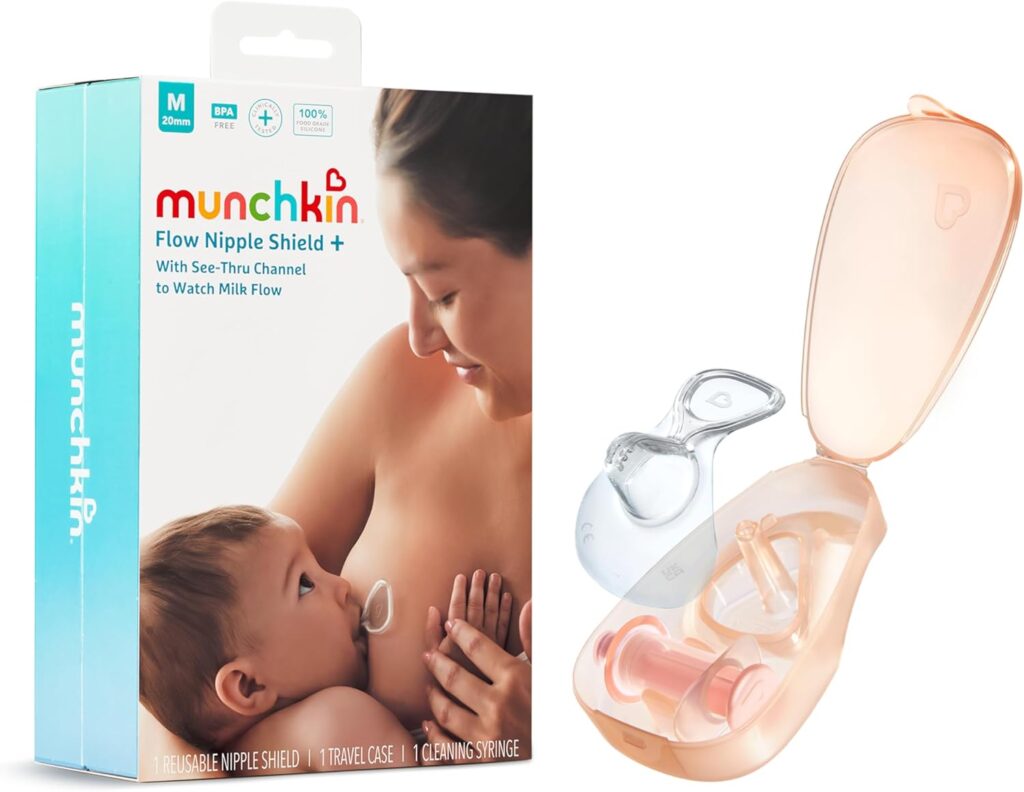
I had never seen this tool—called a nipple shield—before, but honestly, it saved my breastfeeding journey. It works by pulling your natural nipple into the cone so your baby can latch more easily. The milk comes through tiny holes at the end of the cone, much like the nipple of a bottle. They’re surprisingly comfortable and come in different sizes, usually 20 mm and 24 mm, depending on the size of your nipples. In hindsight, I’m so jealous of the Munchkin Flow nipple shield available today. It has a see-through channel so you can monitor milk flow, plus a steam-cleaning carrying case for easy sterilizing—something I would have loved during 2 a.m. feedings. It’s also made of ultra-soft, BPA-free silicone.

The lactation consultant showed me how to use the shield, observed Sophie nursing and adjusted my hold to improve her latch. By the time she left, I had two more nipple shields in hand, an appointment at the hospital’s breastfeeding clinic and a baby who was milk-drunk and sleeping soundly. We were discharged the next morning.
Breastfeeding With Confidence
The consultant suggested I try the shield for the first half of each feeding and then attempt nursing without it, to see if we could get Soph to latch consistently au naturel. Unfortunately, that never worked for us. After a month of trying, I was told to use the shield exclusively—and it worked perfectly for seven months, until I returned to work.
Nearly three years later, I packed a fresh set of shields for the hospital when I delivered Sophie’s baby sister, Juliette. As soon as Jules showed the same frustration as Sophie had, I turned to what I knew. Jules nursed for nine months until she rather adamantly weaned herself (which, ten years later, still suits her personality exactly).
I’ve told countless women about nipple shields since having my kids. I know they aren’t for everyone, and for some, they’re just a short-term fix as the baby adjusts. They’re also sometimes just one of many things people try before making the decision that nursing isn’t for them, and that’s okay, too. But I’ll always be grateful to that lactation consultant who helped me feed my girls for as long as I could—all thanks to a simple silicone disc that made all the difference.
Flow Nipple Shield + Need It, Want It, Wish I’d Had It
The Munchkin Flow Nipple Shield+ is a major upgrade from the basic shields I used (my past postpartum self is extremely jealous). Here are just some of the reasons:
- The see-through channel helps new parents to see when baby is actually feeding. It helps new moms and dads to know if the baby is sucking hard enough, how much milk they’ve managed to get or if they’re just “comfort nursing” (when an infant feeds for other reasons than hunger, like to calm down, settle for sleep, etc).
- It mimics skin-to-skin contact, which is so important in the early days of breastfeeding.
- It comes with a storage case that doubles as a steam sterilizer for safe and easy travel (I had to use a random food storage container and the lid always came off in the diaper bag!).
- It also includes a reuseable cleaning syringe to help new parents ensure they can easily remove any dried milk, etc.
- Flow should be suitable for more than 200 feeds (I can’t tell you the number of shields I had crack relatively quickly, so this is huge).
Flow Nipple Shield + has earned the ParentsCanada Tried & Trusted Seal of Approval!
We invited 10 new moms to try the Munchkin Flow Nipple Shield+ with their newborns and share their honest feedback in a follow-up survey. The results spoke for themselves. Flow impressed our parent testers and met the high standards required to achieve our seal.

Common Breastfeeding Complications
- Breastfeeding challenges are common, from sore nipples to low milk supply. Here’s a quick look at a few complications and what you can do to help.
- Mastitis – A breast infection often caused by clogged ducts. Warm compresses, regular feeding or pumping and hand-expressing can help. Sometimes antibiotics are required.
- Cracked or sore nipples – Often caused by poor latch. Nipple creams, lanolin ointment and adjusting positions can ease discomfort.
- Low milk supply – Frequent nursing, staying hydrated and consulting a lactation specialist are key strategies.
- Engorgement – Gentle massage, pumping between feeds or hand-expressing in a warm shower can relieve pressure.