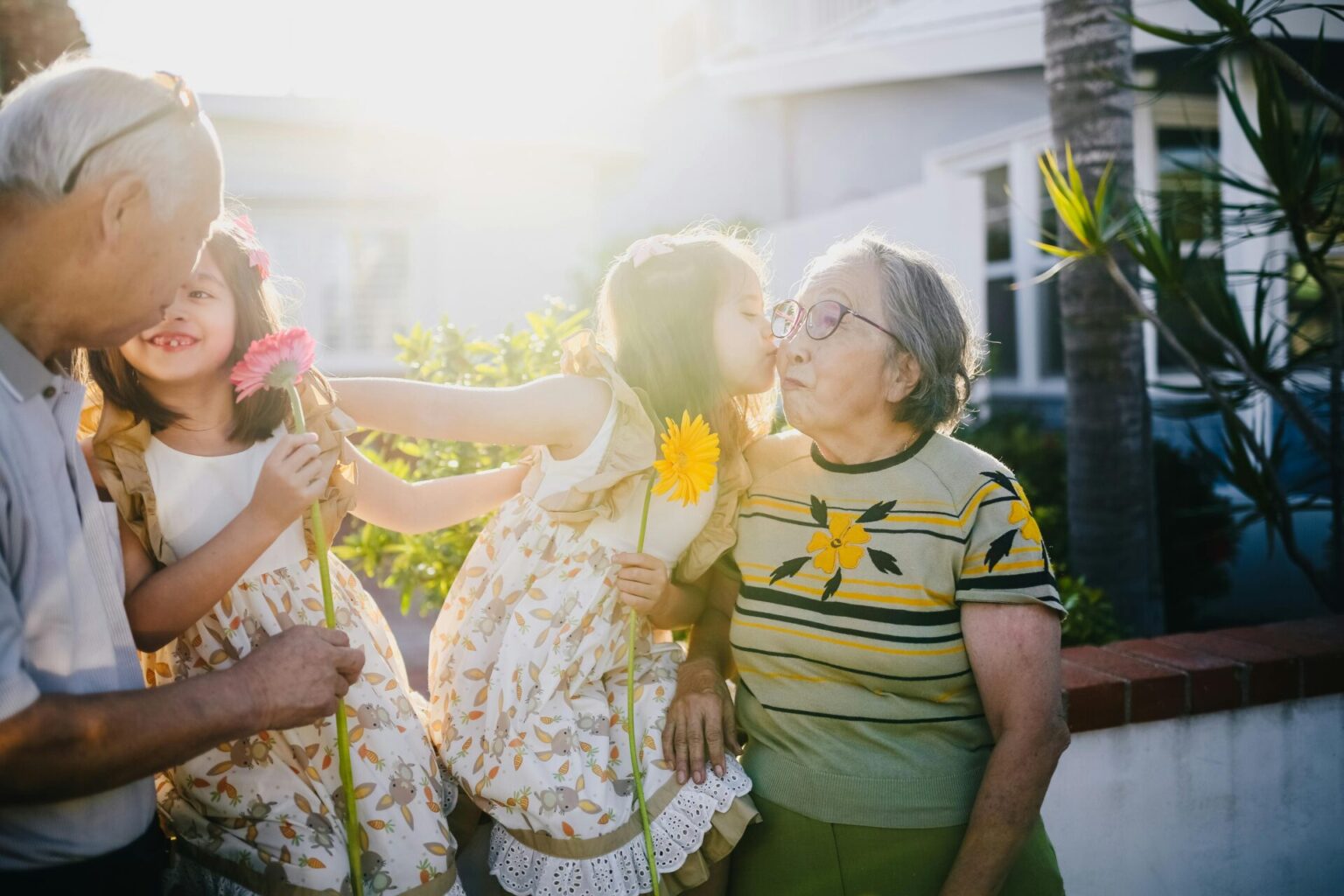
Grandparents' Day is a day to honour the grandparents and grandparental figures in your life. But it's also time for grandparents to reflect on how the grandparent-grandchild relationship benefits them. Kathy Buckworth dives in for this edition of Grandparenting Unfiltered.

You may not know this, but Grandparents’ Day started in the 1970s and is always the first Sunday after Labour Day. On this day we’re supposed to be honouring and celebrating our grandparents, which—as a grandparent myself—I love, but in actual fact grandparents might want to be thanking and honouring their grandkids at the same time.
Why? For the hugs and smiles and joyful moments of course, but also for the fact that their very existence and closeness to us can help us live longer and live more active lives, allowing us to enjoy even more time with them.
Grandchildren Are Good for Us
According to a number of studies over the past few years, grandparents who had a certain level of responsibility for caring for their grandkids have a lower mortality rate (one study even said as much as 37 percent!). That’s a pretty grand number. The research also suggests the following:
- Women aged 57 to 68 who watched their grandkids one day a week had 27 percent better results on memory and cognition testing than non-babysitters. However, if they babysat five or more days, they scored 18 percent lower, clearly indicating that sometimes you can get too much of a good thing.
- Additionally, grandparents who developed and kept strong emotional connections with their grandchildren showed 28 percent fewer depressive symptoms. As those grandchildren became adults, those who had a closer relationship with their grandparents were also shown to have lower rates of depression—around 32 percent, compared to those who weren’t close emotionally for that generation. So, basically, the grandparent-grandchild relationship good for everyone, and distance can be overcome if the emotional ties are there.
- Physically, there is evidence that grandparents who engage actively with their grandkids reduced their heart disease risk by up to 23 percent and were shown to have decreased blood pressure and cholesterol.
- Regular contact also helped to fight loneliness and isolation, with a study suggesting that those who had grandchildren present in their lives could live five to seven years longer.
Clearly, we owe our grandchildren a lot when it comes to our enjoyment of life, both physically and mentally. But being close with our grandchildren has wider community and societal effects as well.
Fighting Ageism One Grandkid at a Time
“Don’t say that about Grandma!” my five year old grandson said to my daughter when she suggested that I might be “too old” to climb a structure in a playground. “Grandma can do anything. She’s not old. Don’t say that!”
Obviously, this kid is shooting to the top of my beneficiaries. But he was proving what a recent study has shown: that children exposed to long periods of time with their grandparents will have a less ageist view towards them.
Ageist attitudes develop at a very young age. When grandkids can see their grandparents participating physically and actively in their lives, particularly when those grandparents are in good health, they are less ageist in their thinking.
Why is this important? Because we live in an ageist society where we are constantly fighting for the rights of seniors and the government funding to support programs and medical facilities.
Did I climb that structure? Of course I did. I’m fighting ageism one step at a time. On Grandparents’ Day and any other day, for that matter.