One in four teenage girls is iron deficient—and it can impact everything from mood to school performance. Here’s why iron should be a top nutritional priority and how to boost it with everyday meals.
Teenage girls are known for a lot of things—mood swings, eye-rolling, making incredible edits on TikTok, fierce loyalty to their friends…the list goes on. But did you know they also share a common nutrient deficiency? And that it can have a major impact on energy, focus and overall health? We’re talking about low iron. About one in four teenage girls in Canada are iron deficient, according to a 2019 study produced by Health Canada. This means that millions of girls across the country may be dealing with fatigue, brain fog, poor school performance and more—all as a result of low iron.
The takeaway is obvious: Preventing low iron needs to be a top priority. And the best way to do that is through nutrition. Read on to learn more.
Why Iron Matters
Iron is essential for so many of the body’s functions. It helps to carry oxygen throughout the body and supports muscle health, immune health and mental well-being. It’s also necessary for growth, energy and brain function.
The iron needs of teenage girls nearly double between the ages of 9–13 and 14–18 because of rapid growth and the onset of menstruation. The latter makes total sense: Blood is iron-rich, and when girls get their periods each month, this leads to a drop in iron levels. (In fact, girls and women with heavy periods can actually end up experiencing iron deficiency anemia due to the amount of blood they lose to their cycle.)
Here’s a snapshot of the daily iron needs of girls and women, in comparison to the iron needs of boys and men:
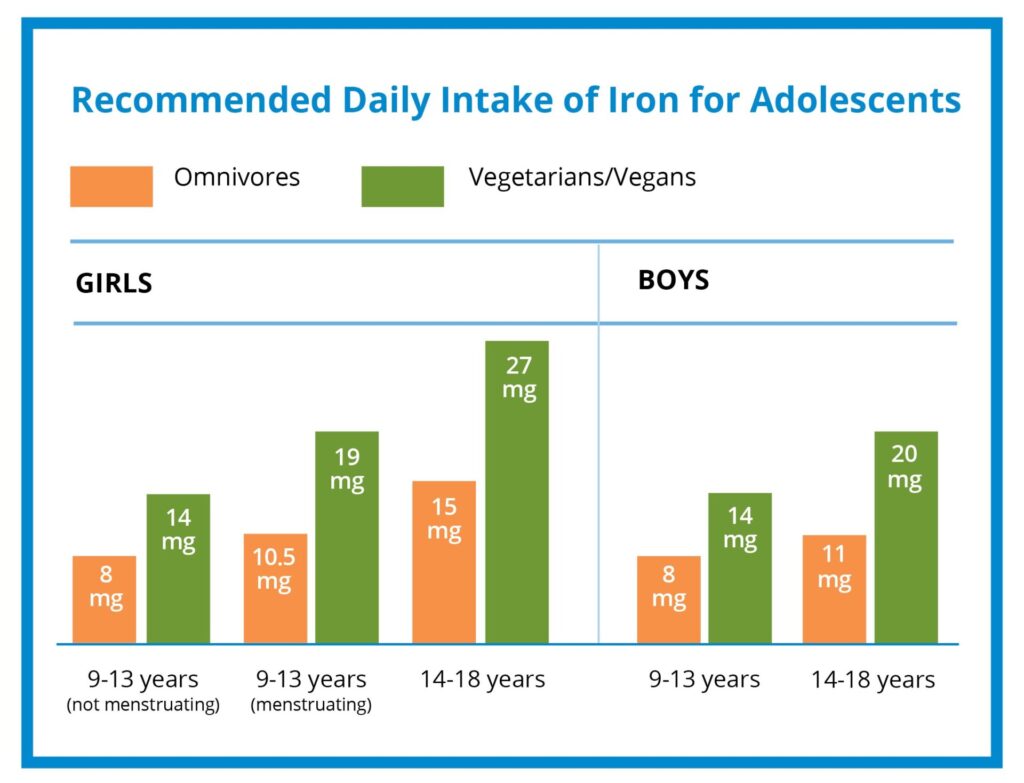
Note: Adolescents, particularly females, who participate in regular intense physical activity may need as much as 30-70 percent more iron than those who do not participate in regular strenuous exercise.
What Happens When Iron Is Low?
When iron levels drop, symptoms can range from mild to severe, depending on how low levels are getting. Early signs include the following:
- Fatigue
- Poor focus
- Irritability
- Headaches
- Dizziness
- Difficulty maintaining a normal level of activity
- Thinning hair
- Chest, muscle and joint pain
If left untreated, low iron levels may lead to depression and anxiety, weakened immune response, heart palpitations and more. In severe cases, a blood transfusion may be required.
If you have concerns about your teenage daughter’s iron, talk to your health care provider and ask for a blood test to check iron levels.
A note on supplements: If a blood test confirms low iron, your healthcare provider will likely try to determine the root cause and recommend supplements along with dietary changes. Supplements can be vital to restoring iron levels in the short term, but if poor diet is the cause, the long term solution is dietary changes to prevent levels from dropping again. Only take iron supplements under medical supervision, and always keep them out of reach of young children to prevent accidental poisoning.
Take a Food-First Approach to Iron
When iron is low, it can take three to six months—or more—to rebuild levels, leaving teen girls feeling tired and off their game. Iron needs stay high through the childbearing years, so learning to eat iron-rich meals now supports long-term health. That’s why a food-first, prevention-focused approach is so important.
There are two main forms of iron:
- Heme iron (from meat, fish and poultry) is well absorbed by the body.
- Non-heme iron (from eggs and plant foods like tofu, lentils, nuts and seeds, spinach, pasta and cereal) is less well absorbed by the body.
RESEARCH SPOTLIGHT: Canadian research shows that eating red meat, like beef, is one of the strongest dietary predictors of better iron status in women. Beef is not only one of the top dietary sources of iron, but it contains heme iron—the form of iron that’s absorbed most efficiently by the body.
Wondering what foods contain the most iron? Download Canada Beef’s Foods That Provide Iron chart, created by the dietitians, and review it with your daughter. Together, check off the iron-rich foods she already enjoys and ones she’s open to trying. Use the list as a guide when choosing recipes and planning meals and snacks—because iron-packed food only helps if it gets eaten. Tailoring your plan to her tastes makes it easier to meet her iron needs in a way that works.
5 Tips for Helping Teen Girls to Eat Enough Iron
It’s not hard to prepare meals and snack with iron in mind—for your daughter, but also for anyone else in your household. Here are some easy ways to amp up iron in your regular meal prep:
- Offer iron-rich foods from animal and/or plant sources at most meals—it doesn’t have to be one or the other. Combining them, like steak with lentil pasta salad, can boost iron on the plate.
- Add some meat, fish or poultry to your plate to boost the iron absorbed from the foods with non heme iron (eggs, tofu, lentils) by a whopping 150 percent.
- Make big batches of iron-rich recipes, like meatballs or cooked ground beef seasoned however you like, that can easily be turned into different meals (nourish bowls, wraps, quesadillas, salads…the list goes on!). See the recipe for Big Batch Beef below.
- Include vitamin C-rich foods with meals and snacks to help the body absorb more iron from eggs and plant-based (non-heme) sources. Keep orange slices, strawberries or bell pepper strips prepped in the fridge for easy snacks or lunchbox add-ins.
- Cook often in cast iron cookware—moist, acidic foods cooked for a long time, like stews, chili, curries or spaghetti sauce, absorb the most iron (non-heme) from the pan. While alone it’s not a reliable way to meet iron needs, using cast iron regularly can give your meals a helpful boost.
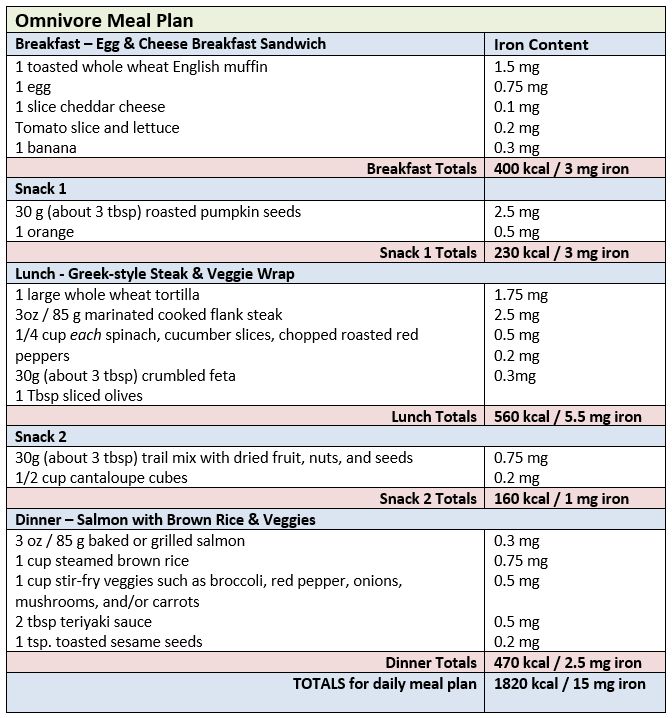
Nutrient values are rounded per Nutrition Labelling Regulations, Health Canada.
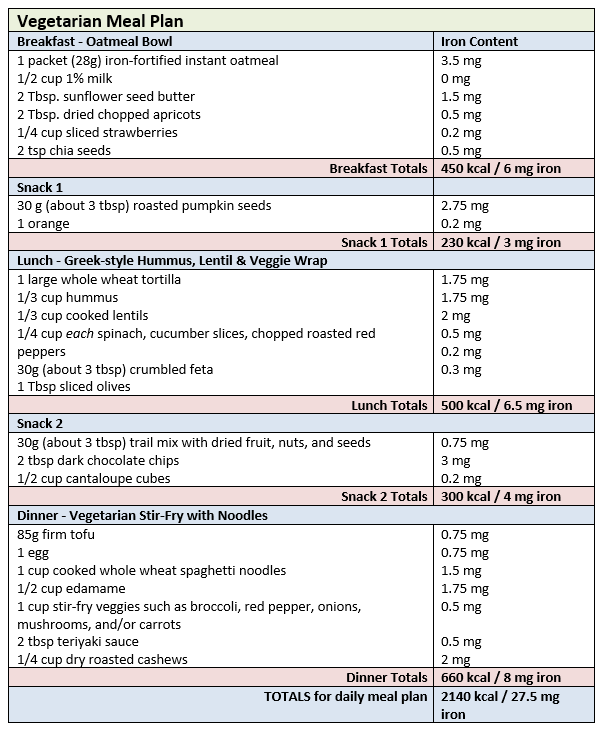
Nutrient values are rounded per Nutrition Labelling Regulations, Health Canada

Need Recipe Inspiration?
For delicious iron-rich recipes, visit the Canadian Beef Information Gateway. Here are just a few of the dishes you’ll find:
- Steak Sandwich with Pan-Fried Mushrooms and Chèvre
- Moroccan-Style Meatballs with Herbed Slaw
- Mexican-Style Make-Ahead Beef Lasagna
Discover everything you need to support healthy choices at every age, including expert nutrition advice, inspiring recipes and helpful videos, in our digital hub: Healthy Living At Every Age.